
Services
AI Search & GEOGet recommended by ChatGPT, Gemini and Google AI Local SEOWin the map pack and "near me" searches Content StrategyContent that AI engines quote Web Design & CROSites that turn visitors into bookings Paid MediaGoogle and Meta ads that feed your AI visibility All ServicesIndustries · Healthcare
Healthcare & Clinics Dentists Optometrists Chiropractors Physiotherapy Med SpasIndustries · Professional Services
Law Firms Real Estate AccountantsIndustries · Home & Local
Home Services All industries ResultsResources
Blog Learn GEOGlossary, learning paths and GEO stats Playbooks State of AI Search 2026Company
About Partners Careers Contact Client LoginLearn GEO
Resources, research and reference for AI-first marketers.
The State of Search
The landscape is shifting daily. Stay updated with the primary sources that define how AI interprets the web.
Why GEO Matters Now
Zero-Click Future: By 2026, Gartner predicts search engine volume will drop by 25% as users switch to chatbots.
Trust over Traffic: AI only cites sources it deems "authoritative."
The "Black Box": Unlike Google, AI models are opaque. You need specialized schema.
Zero-Click Rate
Of searches end without a single click to a website.
AI Overviews
Of Google queries now trigger an AI-generated summary.
Weekly ChatGPT Users
Active users asking questions of a generative engine every week.
Time to Displace
Typical runway to outrank a competitor inside AI answer surfaces.
Freshness
What's New This Month
A running log of meaningful changes in AI search and on this site.
-
May 2026
OpenAI Ads platform brand playbook published. A full breakdown of OpenAI's new self-serve ad platform inside ChatGPT — CPC/CPM bidding, contextual targeting, and how the Answer Independence Principle protects GEO. Read the playbook.
-
Apr 2026
AI Visibility Tracking Playbook published. How to measure brand citation share across ChatGPT, Gemini, Claude, and Perplexity — tools, prompt templates, and a monthly reporting structure. Read the post.
-
Apr 2026
Dental GEO playbook published. Full 9-entity setup for dental clinics — read the post.
-
Apr 2026
Launched a 35-term GEO glossary with
DefinedTermschema — deep-linkable from any post (see glossary). -
Mar 2026
Google AI Mode expanded access. Conversational search surface moved beyond early-access in additional markets, including Canada.
-
Feb 2026
Published the State of AI Search 2026 report — 29 min industry deep-dive on adoption, zero-click, and citation dynamics. Get it here.
-
Jan 2026
Ultimate Guide to GEO 2026 published — the flagship playbook covering Schema Graphs, AI Answer Share, and AI Mode. Read it.
Downloads
Reports & Playbooks
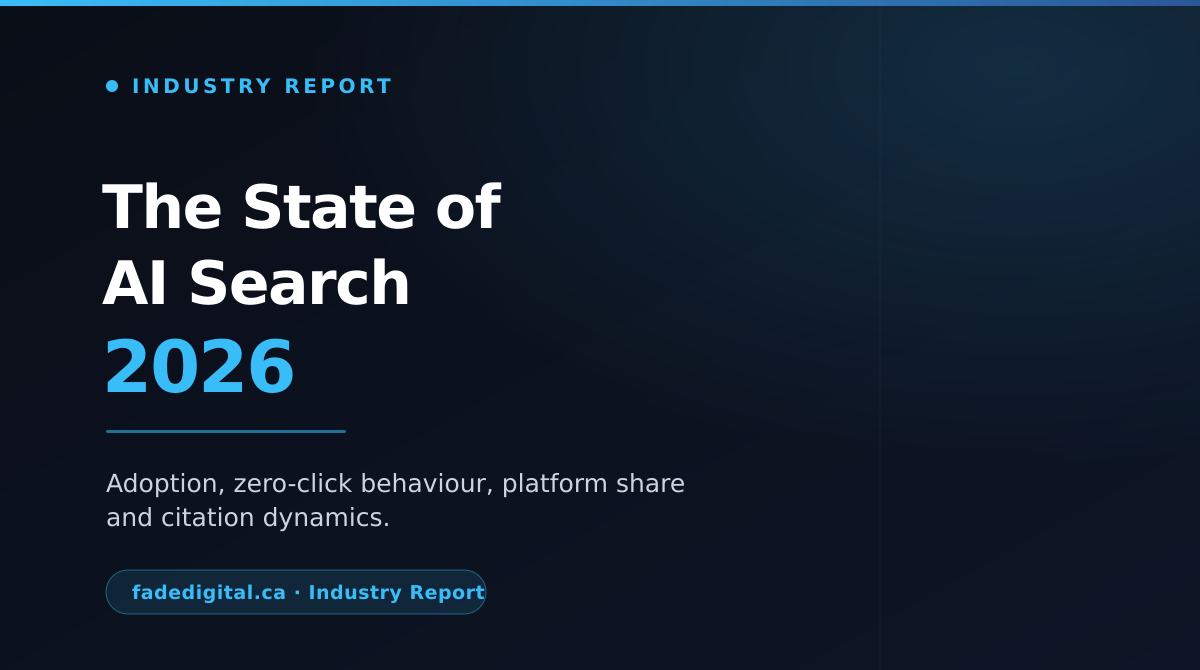
The State of AI Search 2026
Adoption, zero-click behavior, platform market share, and citation dynamics across ChatGPT, AI Overviews, Perplexity, and Claude.
Get the report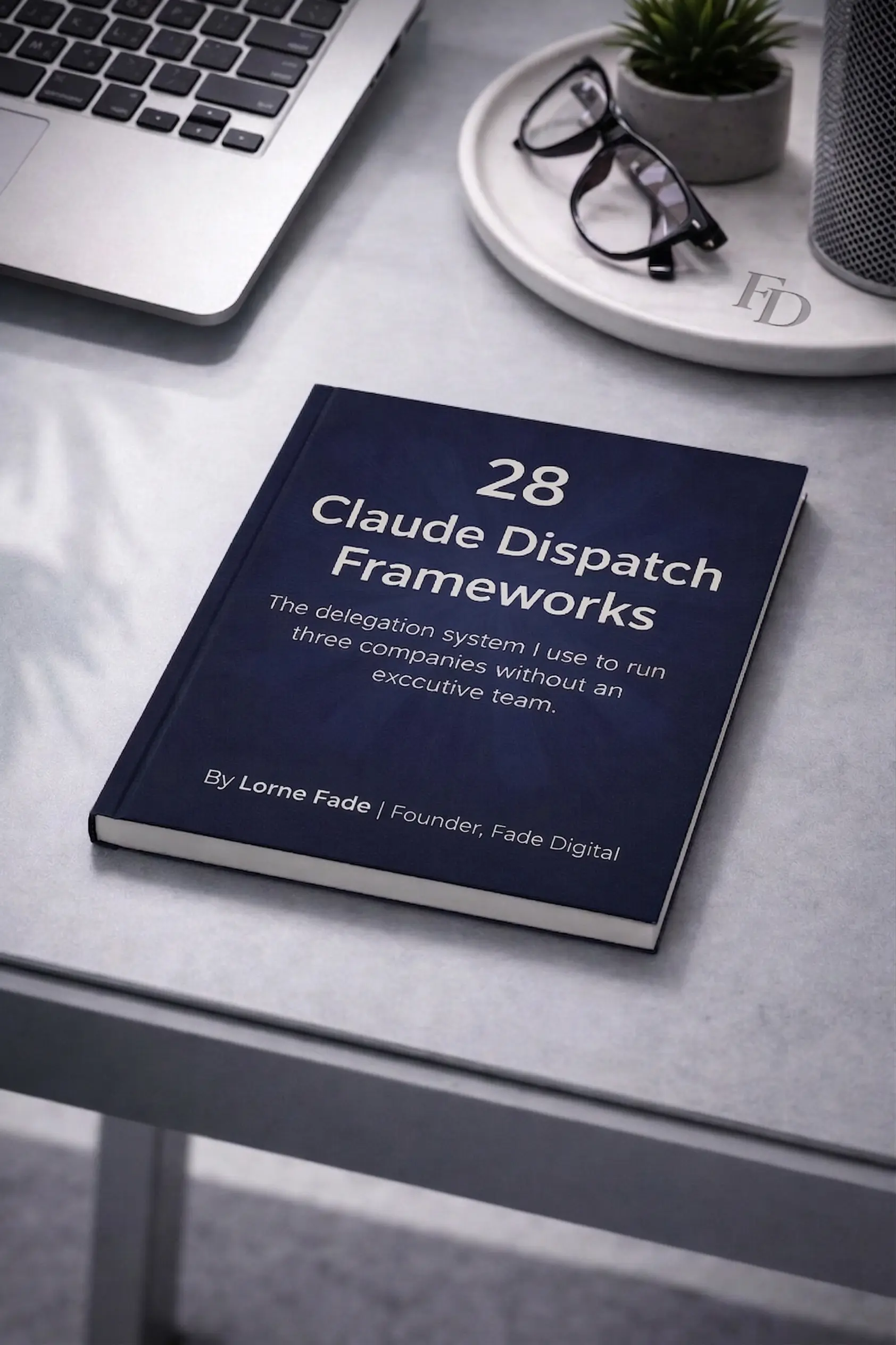
Dispatch Frameworks
Operating frameworks for running async AI work — task dispatch, agent orchestration, and decision patterns for multi-model teams.
Open the framework
SEO Agent Playbook
How to build a Claude-powered SEO agent that audits sites, drafts schema, and tracks AI citation shifts — the stack we run internally.
Read the playbookCurated Tracks
Learning Paths
Sequenced reading to take you from GEO fundamentals to vertical-specific entity architecture.
GEO 101: Start Here
The fundamentals of optimizing for AI search, from terminology to the full GEO playbook.
Schema & Entity Architecture
Go from basic schema to a full knowledge graph that AI systems actually cite.
Local & Industry GEO
How AI picks local businesses, why reviews aren't enough, and a full vertical case study.
Platforms & Agentic Commerce
Where AI search is headed — agentic browsers, machine-readable catalogs, and the patterns LLMs reward.
Reference
GEO & AI Search Glossary
Canonical definitions for the terminology we use across this site and in client work.
Core Concepts
- Generative Engine Optimization (GEO)
- The practice of optimizing a brand's entities, content, and structured data so LLMs cite it when generating answers in ChatGPT, Gemini, Perplexity, and AI Overviews. Full guide →
- Answer Engine Optimization (AEO)
- Optimizing content to be chosen as the direct answer on answer-first surfaces — featured snippets, voice assistants, and AI chat interfaces.
- Large Language Model (LLM)
- A neural network trained on large text corpora that predicts and generates language — the reasoning engine behind ChatGPT, Claude, and Gemini.
- Retrieval-Augmented Generation (RAG)
- A technique where an LLM pulls live documents from an index at query time and uses them as context, grounding output in verifiable sources.
- Zero-Click Search
- A search session that ends without a click because the engine already displayed the answer inline — now the dominant behavior on AI surfaces. See the data →
- Grounding
- The process by which an AI system anchors generated text to retrieved source documents so output can be attributed rather than hallucinated.
- Hallucination
- An AI-generated statement that sounds authoritative but is factually wrong or fabricated, typically from weak grounding or missing source data.
Ranking & Trust Signals
- Information Gain
- A ranking concept measuring how much new, non-redundant information a page adds relative to what an AI already knows — favours original research.
- Brand Confidence
- The degree to which an AI is confident that a brand is real, reputable, and unambiguous — a composite of entity clarity, citations, and reviews.
- E-E-A-T
- Experience, Expertise, Authoritativeness, Trustworthiness — Google's quality framework, now extended as a trust signal across AI surfaces.
- Entity Salience
- How prominent and disambiguated a named entity is within content — a key factor in whether an LLM links that content to the right brand.
Structured Data & Technical
- JSON-LD
- JavaScript Object Notation for Linked Data — the recommended format for embedding Schema.org structured data inside HTML pages. Templates →
- Schema Markup
- Machine-readable metadata drawn from Schema.org that describes entities and relationships on a page so engines and LLMs parse them reliably. Templates →
- Schema Graph
- An interconnected set of Schema.org entities on a site linked via @id references, producing a miniature knowledge graph unique to the brand.
- Knowledge Graph
- A structured database of entities and their relationships — used by Google, LLMs, and AI assistants to reason about real-world concepts. Full playbook →
- Entity
- A uniquely identifiable thing — person, organization, place, product, or concept — that can be referenced across a knowledge graph.
- @id Reference
- A JSON-LD mechanism for referring to a previously declared entity by its canonical URL, avoiding duplication across schema graphs.
- llms.txt
- A proposed plain-text file at a site's root that gives LLM crawlers a curated map of the most important content — analogous to robots.txt.
- Speakable Markup
- Schema.org markup that tags sections of a page suitable for text-to-speech playback by Google Assistant, Siri, and Alexa.
AI Platforms & Surfaces
- ChatGPT Search
- OpenAI's in-product search surface inside ChatGPT that browses the live web and cites sources when answering queries.
- Google AI Overviews
- AI-generated summaries at the top of Google search results for eligible queries, citing a small set of source URLs.
- Google AI Mode
- A conversational, AI-first Google search experience that replaces ten-blue-links with a generative answer and supporting citations.
- Perplexity
- An AI answer engine combining web retrieval with LLM synthesis, known for prominent inline source citations.
- Claude
- Anthropic's family of conversational LLMs used in ChatGPT-style assistants, coding tools, and enterprise AI workflows.
- Gemini
- Google's multimodal LLM family powering AI Overviews, AI Mode, and the standalone Gemini assistant.
- ChatGPT Atlas
- OpenAI's agentic browser that lets ChatGPT navigate, read, and transact on websites — introducing new citation and visibility dynamics.
- Perplexity Comet
- Perplexity's agentic browser, performing research and multi-step tasks while exposing source citations throughout the session.
Local & Entity Signals
- NAP
- Name, Address, Phone — the core local-business identifiers that must stay consistent across a brand's website, directories, and structured data.
- LocalBusiness Schema
- The Schema.org type used to describe a physical business location — address, hours, services, and geographic coordinates.
- AggregateRating
- A Schema.org property for the aggregate score and review count of a business or product — used to render star ratings and trust signals.
- Google Business Profile
- Google's free local-business listing product (formerly Google My Business) feeding Maps, local pack results, and AI local recommendations.
- Place Entity
- A Schema.org entity for a physical location, used with LocalBusiness to carry geo, accessibility, and amenity data.
- Local Citation
- A mention of a business's NAP on a third-party directory or authoritative site, used as a corroborating signal for local and AI search trust.
Latest
Fresh from the Blog
Our three newest posts. Head to the blog for the full archive, search, and category filters.
Practitioner Kit
Tools & Frameworks
The utilities we use — and recommend — for auditing entity graphs and tracking AI citations.
Built by Fade
Our own toolset for auditing, orchestrating, and scaling GEO work.
Validators & Testers
Verify schema, structured data, and crawlability before you ship.
Primary Sources
Official documentation and news feeds from the platforms themselves.