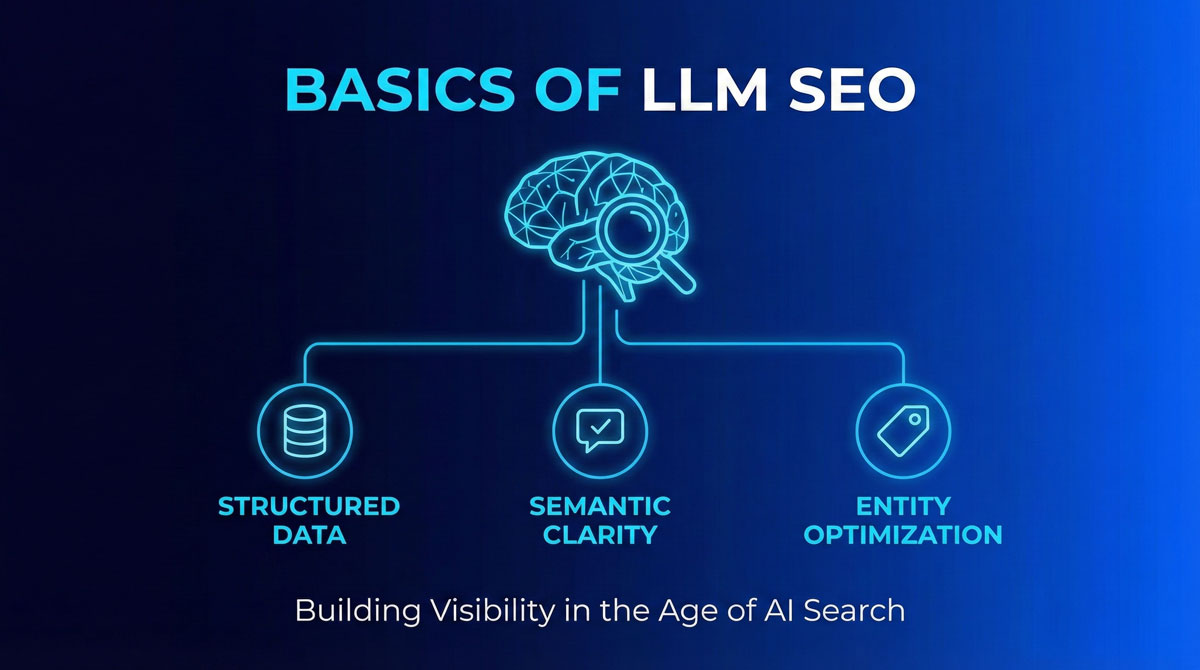
Large Language Models such as GPT-4, Gemini, and Claude don’t “think” like human readers. They operate on statistical patterns shaped by trillions of tokens, giving disproportionate weight to clarity, structure, and semantic consistency.
Traditional keyword strategies (short-tail, vague, or overly clever phrasing) rarely rise to the top of AI-generated answers. What does rise are highly structured, question-based, comparison-style patterns that mirror the Q&A data LLMs are trained on.
If you want your content cited by AI models and surfaced in AI-driven search (SGE, AI Overviews, chatbots, enterprise copilots), you need to optimize for these patterns.
1. “What is [concept] and how does it work?” – The foundational Q&A pattern
LLMs learn directly from Q&A datasets. When your keyword matches the input/output structure they’re trained on, the model treats your content as a high-confidence answer source.
Example shift
- Instead of:
marketing strategy - Target: “What is a marketing strategy and how does it work?”
This pattern resolves the full conceptual arc: definition + mechanism. LLMs recognize it as authoritative and complete—exactly the kind of snippet they reproduce for broad, foundational questions.
2. “Best [solution] for [specific use case]” – Ranking queries models love
Typical queries:
- Best CRM for small businesses
- Best project management tools for remote teams
LLMs are constantly asked to recommend tools. They lean heavily on structured “best-of” lists because they can easily extract:
- Ranked options
- Pros and cons
- Feature breakdowns
If you want to appear when AI recommends tools, you need content that already reflects this comparison structure.
3. “How to choose [solution type]” – Decision-support for high-intent users
Decision-making content is disproportionately cited for B2B and enterprise queries.
Examples
- How to choose a marketing automation platform
- How to choose the right CMS
This pattern aligns with a core use case for LLMs: helping users make informed choices. Content that includes:
- Evaluation criteria
- Scoring frameworks
- Comparison tables
is extremely easy for models to reuse in their own answers.
4. “[Tool] vs [Tool] comparison” – Citation gold
Users constantly ask: “What’s the difference between X and Y?”
Common examples:
- Slack vs Microsoft Teams
- HubSpot vs Salesforce
Well-structured comparison posts provide clear contrasts—features, pricing, strengths, weaknesses. This fits perfectly with the contrastive reasoning LLMs are trained on, making these pages some of the most frequently cited formats online.
5. “[Industry] + [process] + best practices” – Where vertical expertise wins
Examples:
- SaaS onboarding best practices
- E-commerce checkout optimization
These keywords embed:
- An industry
- A process
- An improvement intent
Enterprise users ask these questions constantly. LLMs respond by pulling from prescriptive, industry-specific best-practice content. If you own a niche vertical, this is a high-leverage pattern.
6. “What does [term] mean in [context]?” – High-value inline definitions
Examples:
- What does churn rate mean in SaaS?
- What does conversion rate mean in e-commerce?
LLMs frequently need to explain terms inside broader answers. Precise, context-specific definitions become reusable building blocks the model can drop into many different responses.
7. “[Year] guide to [topic]” – Freshness-optimized keywords
Examples:
- 2025 guide to content marketing
- 2025 SEO checklist
Models prioritize recency when answering time-sensitive queries. Year-based titles clearly signal freshness and are more likely to be trusted when AI assembles “current” recommendations and frameworks.
Bonus patterns that dominate LLM citations
You’ll see these structures repeatedly in AI outputs:
- “According to [authority]” – LLMs value verifiable attribution.
- “Step-by-step guide to…” – Perfectly structured for procedural answers.
- “Complete checklist for…” – Highly scannable and easy to extract.
- “[Number] ways to…” – Predictable list format, ideal for summarization.
Tools to surface these keyword patterns
- AlsoAsked – Finds Q&A clusters around your topic.
- AnswerThePublic – Exposes “what / how / why” questions in your niche.
- Semrush Keyword Magic – Filters specifically for informational queries.
- Google’s People Also Ask – Real prompt patterns LLMs are trained on.
Use these to reverse-engineer the phrasing that AI already favors.
Key takeaways: the 7 keyword patterns LLMs can’t ignore
Optimize for questions, not abstract nouns.
“Marketing strategy” → “What is a marketing strategy and how does it work?”Build comparison and “best-of” assets.
These are AI citation magnets.Refresh content annually.
Year-based guides and updated checklists send strong freshness signals to AI systems.
Action step
Take your top five target keywords, rewrite each using the patterns above, and create pages that answer those questions directly in the first paragraph. That’s how you position your content to be cited—and surfaced—by every major AI model.