The SEO Game Has Changed
For 20+ years, SEO revolved around one mission: rank number one on Google.
You optimized for keywords. You built links. You refreshed content every quarter. You chased algorithm updates, PageRank signals, and Core Web Vitals.
That era is over.
In 2025, a new dominant search engine emerged. It does not show 10 blue links. It does not rely on ranking factors. It does not send traffic based on positions.
It produces one synthesized answer, built from everything it has read.
It does not crawl. It comprehends.
It does not rank. It reasons.
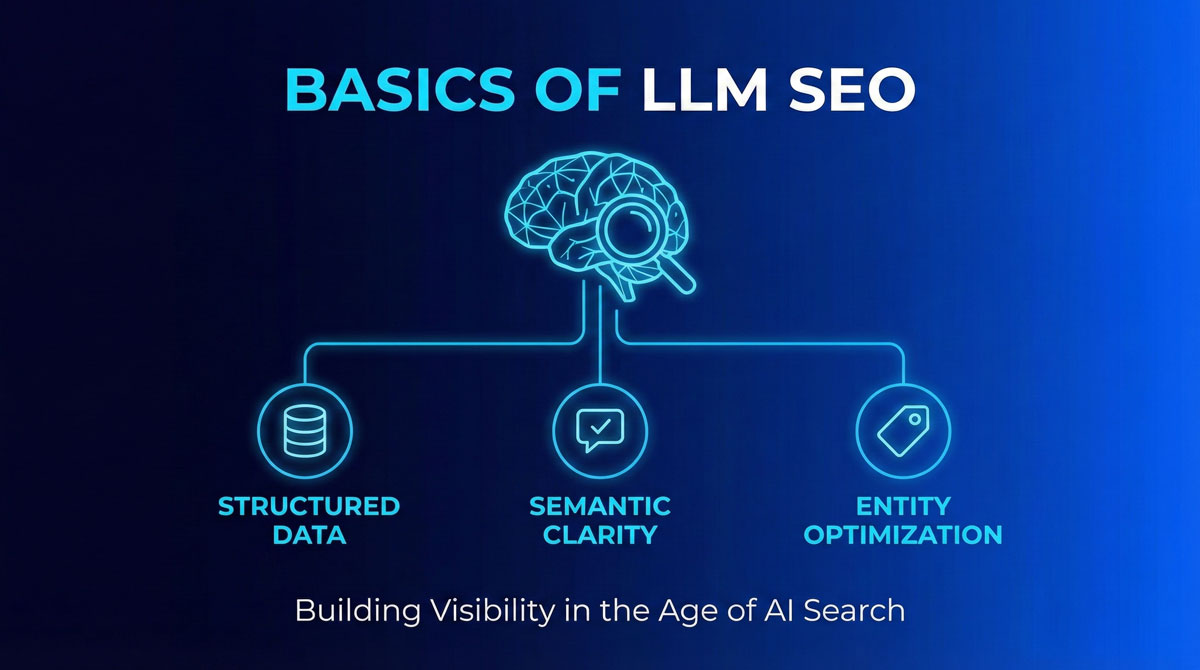
Welcome to LLM SEO — the discipline of getting included in AI-generated answers.
What Is LLM SEO?
LLM SEO (Large Language Model SEO) is the practice of optimizing your content so AI systems can:
- detect it
- extract it
- trust it
- summarize it
- and cite it
…inside their generated output.
This applies to:
- ChatGPT (Browse + GPT-4o + Memory)
- Perplexity.ai
- Google AI Overviews (Gemini)
- Claude (Anthropic)
- Microsoft Copilot (Bing)
- You.com
- Pi.ai
These tools don’t operate like Google. They don’t pull a list of pages. They:
- parse your semantic structure
- identify claims and entities
- look for grounded evidence
- check cross-source consistency
- synthesize an answer for the user
In short: they think more like people than crawl bots.
LLM SEO is about becoming a trusted, frequently cited source inside that reasoning loop.
How LLMs Decide What to Cite
This is the part nobody pays attention to, but it is the core of modern visibility.
LLMs reference content based on:
Data Quality & Structure
Clear, declarative, fact-based content with tight structure wins.Entity Strength
If your brand is weakly represented across the web’s knowledge graph, your authority collapses.Citations & Mentions Across High-Trust Sources
Wikipedia. Crunchbase. News. Industry databases. Reputable blogs.Consistency Across the Open Web
Conflicting information kills citations instantly.Answerability
If the first 2–3 sentences of your content do NOT directly answer a query, you won’t be used.
This is why LLM SEO is fundamentally different from Google SEO.
Traditional SEO vs LLM SEO
| Traditional SEO | LLM SEO |
|---|---|
| Rank pages using links and on-page signals | Extract structured information from your content |
| Optimize for the SERP | Optimize for inclusion inside a generated answer |
| Google decides rank order | AI decides relevance, truthfulness, and usefulness |
| Winning means being clickable | Winning means being citable |
The biggest mindset shift:
You are no longer optimizing for clicks. You are optimizing for inclusion.
The Numbers Do Not Lie
The data is brutal:
- 25% of all search volume will shift to AI chat interfaces by 2026 (Gartner)
- Billions of users rely on ChatGPT monthly
- Perplexity traffic jumped 1200% in 2024
- 70% of Perplexity answers show citations before traditional links
- 50%+ of Gemini’s citations are NOT in Google's top 10 (Semrush)
- 85% of ChatGPT-4o citations come from only 2–3 domains per answer
This last stat matters most.
If you become one of the 2–3 sources an AI prefers, you win disproportionately.
The entire AI ecosystem becomes an amplifier.
Most companies will never understand this.
Why LLM SEO Requires an Entire Stack
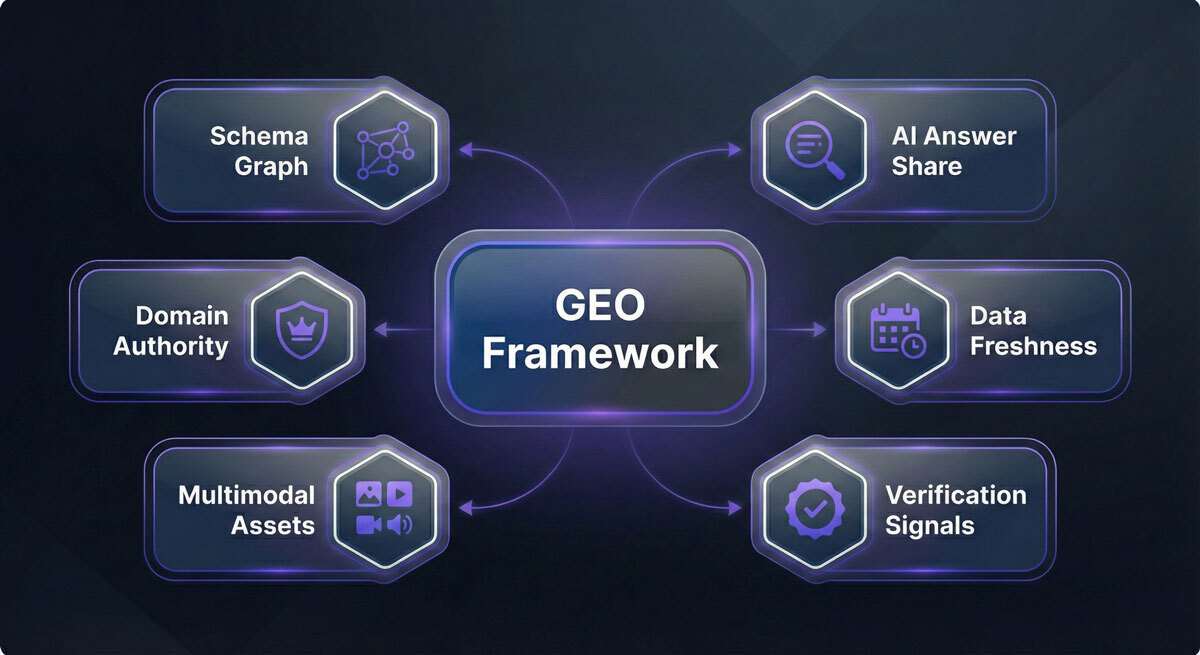
LLM SEO isn’t one tactic. It’s a system of layers:
1. AEO (Answer Engine Optimization)
Craft content so AI engines can extract the answer in seconds.
This includes:
- First-sentence direct answers
- Declarative phrasing
- Clear entity definitions
- Clean semantic hierarchy (H1 → H2 → H3 → lists)
If an LLM can’t pull a clean answer, you won’t be featured.
2. GEO (Generative Engine Optimization)
Your goal: become a top-cited, top-summarized source in GPT-4o, Perplexity, Gemini, and Claude.
GEO relies on:
- Credible citations
- Structured data
- Brand entity strength
- High-trust dataset presence
- Domain reputation consistency
LLMs pull from their entire memory of the web — not only your top-ranking pages.
3. AIO (AI Interaction Optimization)
This is what makes people click when AI gives them a summary with links.
You must have:
- Clear value propositions
- Strong snippets
- Schema that generates compelling rich answers
- Directly attributable takeaways
AEO = get featured
GEO = get cited
AIO = get clicked
Master these three and you own AI-first search.
Why Top-Cited Content Rarely Ranks #1 in Google
AI systems do not rely on PageRank. They forecast usefulness.
They ask:
- Is this source trustworthy?
- Does it answer the question clearly?
- Is the data consistent with other sources?
- Is the claim verifiable?
This explains why:
More than 50% of Gemini’s citations come from pages that are not in Google’s top 10.
Google ranks for popularity + links.
AI ranks for clarity + truth density + structure.
If your content is “high-clarity, high-signal,” you win in AI even if you’re invisible on Page 1 of Google.
Before You Scale
Do not rewrite your entire website yet.
Validate your LLM visibility first.
Our free AI Visibility Scan identifies:
- How your domain appears across top AI engines
- Where you are and are not cited
- How your content is parsed by LLMs
- Whether you have enough entity strength to scale
- A green/red signal for whether to invest in full LLM SEO
Scaling without validation is expensive and slow.
Validate → then execute.
Key Takeaways: LLM SEO Basics
- Search is shifting from ranking pages to generating answers.
- Your goal is to be included in the LLM output, not just ranked.
- LLM SEO relies on three pillars:
AEO (feature), GEO (cite), AIO (click). - Most businesses have zero presence in top AI engines.
- AI citations cluster heavily.
If you become one of the “favored few,” visibility compounds fast. - The fastest win: rewrite your top 10 pages so the first 1–2 sentences answer the core question directly.
This is the new starting point for search.
If AI cannot extract your answer instantly, you do not exist.
Ready to put this into practice? Our GEO Architecture service builds the entity and schema foundation above, or run a free AI Visibility Scan to see where you stand across ChatGPT, Gemini, Claude, and Perplexity.