Sundar Pichai opened Google I/O 2026 with a number that's easy to miss but tells the whole story. In May 2024, Google's APIs processed 9.7 trillion tokens per month. In May 2025, 480 trillion. As of this month — May 2026 — Google is processing 3.2 quadrillion tokens per month. That's a 7x year-over-year jump on top of an already-330x year before it.
If you've been waiting for a signal that AI search has finished its disruption phase and entered its scale phase, this was it. And almost everything Google announced underneath that number — Gemini 3.5, Gemini Omni, Spark, Antigravity 2.0, Ask YouTube, Ask Maps, Stitch, intelligent eyewear, Docs Live, 8th-gen TPUs — is downstream of the same point: AI is no longer a feature Google is rolling out. It's the operating layer the entire product surface now runs through.
For marketers and brands, this changes the gravity of the work. AI Mode is now the second-largest AI search interface in the world (behind ChatGPT) and lives inside the largest search engine. AI Overviews serves 2.5 billion monthly users. The Gemini app grew from 400 million to 900 million MAUs in a year. The discoverability layer that determined which businesses got found in 2010-2024 has been replaced. The new layer doesn't crawl, rank, and serve ten blue links — it reasons, synthesizes, agents, and answers.
This is the explainer for what shipped and what it means. If you've been operating on a pre-I/O 2026 model of Google search and AI, you're now behind.
Gemini 3.5 Flash: faster than the frontier, half the price
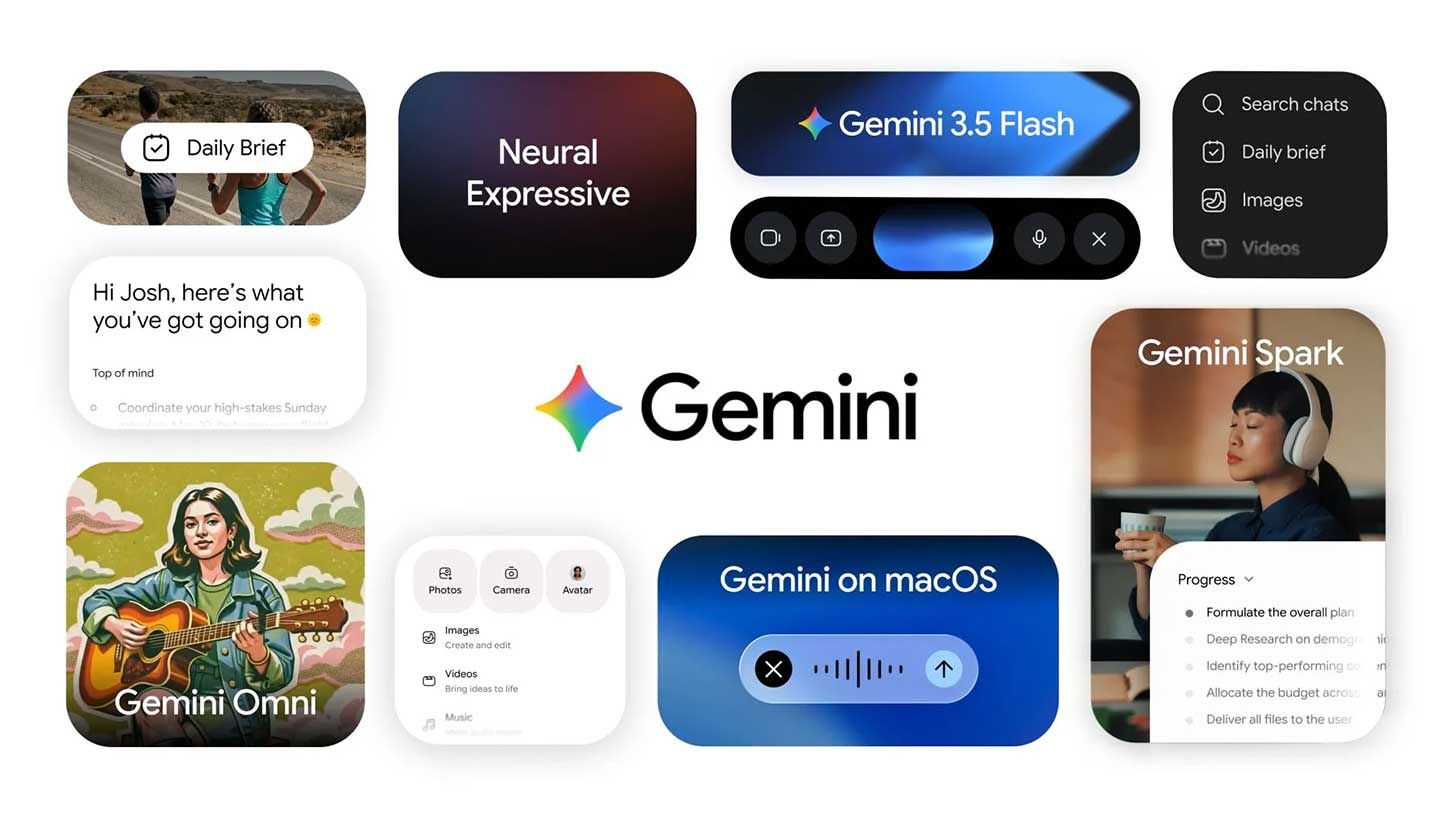
The headline model launch was Gemini 3.5 Flash, available today across the Gemini app, AI Mode in Search, the Antigravity platform, and the Gemini API (AI Studio, Android Studio, Enterprise Agent Platform).
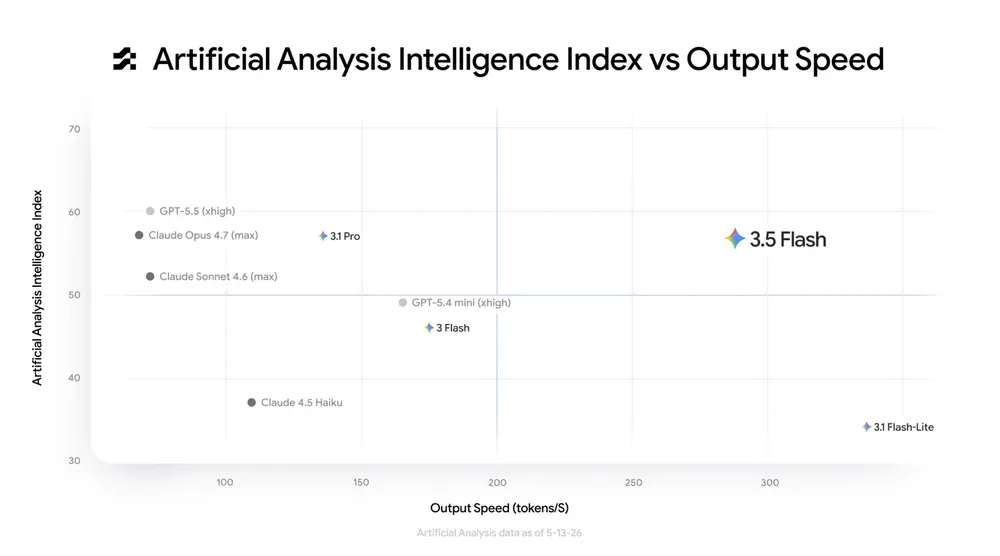
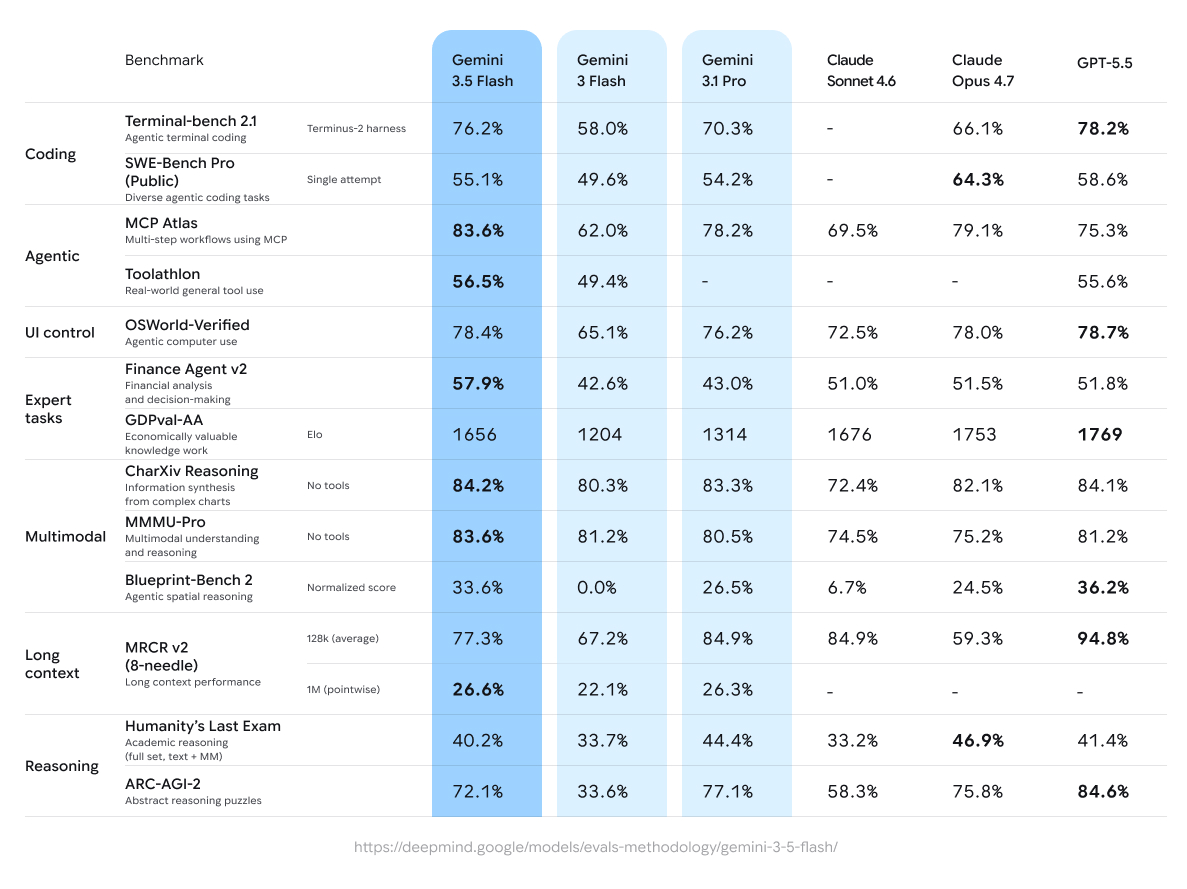
The numbers are striking. Gemini 3.5 Flash outperforms Gemini 3.1 Pro on nearly every benchmark. It runs at 4x the output speed of other frontier models and costs less than half as much. On the Artificial Analysis Intelligence Index, it lands in the top-right quadrant — the zone where intelligence and latency stop trading off against each other.
The specific scores Google led with:
- Terminal-Bench 2.1: 76.2%
- GDPval-AA: 1656 Elo
- MCP Atlas: 83.6%
- CharXiv multimodal reasoning: 84.2%
What this means in practical terms: the previous tradeoff in Gemini's lineup — Pro for hard tasks, Flash for cheap fast tasks — collapses. Flash is now strong enough for most production agent work, which means the unit economics of agentic AI just dropped by more than half overnight. Gemini 3.5 Pro is coming next month and is already being used internally; Google described early results as "very positive."
For the SEO side of the house, the consequence is immediate. AI Mode in Google Search is now powered by 3.5 Flash. The reasoning, synthesis, and citation logic behind every AI answer Google shows your customers is faster, cheaper, and more capable than it was last month. The bar to be cited has gone up, because the model can read more sources, weigh more entities, and discriminate more carefully between authoritative and shallow content. The same brand strategies that worked in last year's AI Mode — keyword padding, generic content, weak entity signals — work worse now. We've been writing about this transition all year; the ultimate guide to AI SEO and GEO in 2026 lays out the foundational changes, and our state of AI search 2026 report has the macro picture.
Gemini Omni: any-to-any generative video, conversational editing, world-aware physics
The most visually impressive launch of the keynote was Gemini Omni. The tagline Google ran: "create anything from anything."
What it actually does: Omni accepts text, image, audio, video, sketches, or any combination as input. It produces video output today, with image and text output rolling out next. It edits iteratively through natural conversation — you say "make the mirror ripple like liquid," and it does, while keeping every other element of the scene consistent. It understands physics (gravity, kinetic energy, fluid dynamics) deeply enough that the marbles in a chain reaction actually behave like marbles. It integrates Gemini's world knowledge, so a clay-animation explainer of protein folding is scientifically accurate rather than just visually plausible.
This is the model that closes the gap between consumer creative tools and professional production. Brand teams that have been using Veo for cinematic short-form and Nano Banana for image work now have a single model that does both, conversationally, with iteration-friendly editing that preserves coherence across edits.
Availability: Gemini Omni is live today for Google AI Plus, Pro, and Ultra subscribers via the Gemini app, Google Flow (Google's creative studio), YouTube Shorts, and YouTube Create — at no extra cost. Developer and enterprise APIs roll out in the following weeks. Every output is watermarked with SynthID and embeds C2PA Content Credentials.
The marketing implication: video creation cost just dropped to near zero for any brand willing to learn the prompting craft. We've covered this skill in depth — see the AI Prompting Playbook for the conversational register that gets the best output from these models. The brands that figure out video Omni first will produce 10-50x more content per dollar than their competitors are this quarter.
Gemini Spark: a personal AI agent that runs while you sleep
The most strategically significant launch of the keynote — easy to under-rate at first glance — was Gemini Spark.
Spark is a personal AI agent that runs 24/7 on a dedicated Google Cloud virtual machine. It works in the background on long-horizon tasks while you're doing other things. You can reach it through the Gemini app, email, or chat. Chrome integration ships this summer. The Android Halo UI — a system-level agent surface — arrives later in 2026. Third-party tools plug in through the Model Context Protocol (MCP), the same open standard ChatGPT and Claude use for tool calling, which means Spark inherits an ecosystem of integrations from day one.
The default agent that ships with Spark is called Daily Brief: it reads your inbox, calendar, and tasks every morning, synthesizes priorities, and delivers a digest. That's the entry point. The deeper capability is that Spark is a substrate for personal agents — users can build their own, and developers can ship them through the platform.
What this means for brands: the user-side of agentic commerce is now real. Spark will book, research, compare, summarize, and decide on behalf of its user. The question every brand needs to ask is "can a Spark agent successfully transact with my business on its user's behalf without a human in the loop?" If the answer is no — your booking flow needs a captcha, your pricing requires a phone call, your inventory isn't machine-readable, your reviews live in a walled garden — the agent goes somewhere else. That somewhere else becomes your competitor.
We wrote about this transition before I/O in Agentic Commerce Is Coming. Spark is the production confirmation: the agents are here, they're embedded in the OS layer (Android, Chrome, Gmail), and they're going to transact billions of decisions per month by year-end. Brands that exposed machine-readable APIs, structured booking data, and clean schema win every coin flip an agent runs.
AI Mode passes 1 billion users. AI Overviews at 2.5 billion.
Two numbers from the keynote that should change every search budget conversation in the next ninety days.
AI Mode, the conversational search experience Google launched a year ago, now has over 1 billion monthly active users. It went from launch to a billion users in twelve months. That's faster than Instagram, TikTok, or ChatGPT's first year. It's the second-largest AI search surface in the world.
AI Overviews — the synthesized answer block that appears above traditional results on Google.com — now serves 2.5 billion monthly active users.
Add those numbers up and the share of Google traffic that hits an AI synthesis layer before anyone clicks a blue link is now the majority of Google search activity. The model that's reading your site, picking your citations, and deciding which brands get named is the same Gemini 3.5 Flash announced today.
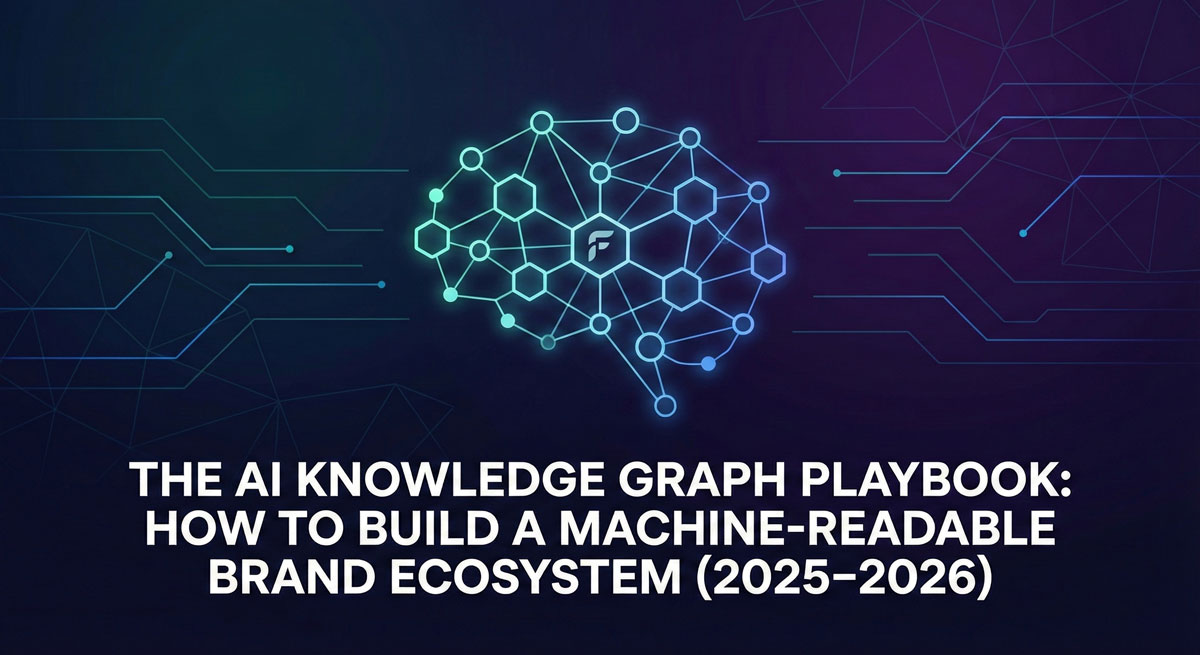
This is where Generative Engine Optimization becomes non-negotiable. The discipline isn't "do SEO and also some AI stuff." It's two parallel optimization stacks: classic SEO for the long tail of blue-link clicks (still a meaningful chunk of traffic), and GEO for the AI-synthesized answer layer that now sits on top of everything. We've laid out the full architecture in our AI Knowledge Graph Playbook and Hacking the ChatGPT Knowledge Graph — the same entity-strength logic that wins ChatGPT citation wins AI Mode citation, because both models read the same surface of public web signals to build their entity graphs.
If you want the local angle, our industry-specific GEO breakdowns cover where the work concentrates by vertical: GEO for healthcare, GEO for dental clinics, ChatGPT for Toronto real estate, and law firm AI visibility. The same patterns hold across AI Mode.
Search Generative UI: custom interfaces per query
A quieter announcement with large second-order effects: Search is rolling out Generative UI, where AI Mode generates a custom interactive layout in response to the query. Comparing flights? You get an interactive comparison table. Researching a renovation? You get a budget calculator embedded in the result. Planning a trip? A persistent dashboard.
This launches free to all users this summer, powered by Gemini 3.5 Flash. Persistent custom dashboards for longer-running tasks follow in the months after.
For brands, this fragments what "ranking" even means. Your brand might be cited as a source in the generated interface, embedded as a data point in a comparison widget, or surfaced as a bookable option inside a dynamic itinerary. The optimization surface is no longer a single SERP — it's a dynamically rendered UI that varies by query and user. Structured data, schema markup, and machine-readable feeds are the only way to be reliably surfaced inside these interfaces. Our JSON-LD schema templates for AI cover the markup patterns that AI Mode reads to build these custom UIs.
Antigravity 2.0 and Stitch: the agent-building stack ships
For the developer and design side of the audience, two Google Labs announcements stand out.
Antigravity 2.0 is now a standalone desktop application for building, orchestrating, and running agents. Paired with Gemini 3.5 Flash, it runs collaborative subagents — multiple agents working in parallel on subtasks of a larger goal — at 12x the speed of other frontier models. Google Flow Agent, which extends Antigravity to creative work and supports "vibe coding," shipped to everyone the same day.
Stitch, the AI design tool from Google Labs, became a live collaborative partner. The Stitch Agent now streams its work straight to the canvas as it generates, accepts input as text, voice, an existing codebase, or design files, and lets designers steer iterations mid-flight rather than waiting for a finished output. Designs export to Antigravity to wire up backend logic. Sites publish directly via Netlify. Sharing happens through Google AI Studio links.
The combined message: Google is shipping the production toolchain for the agent era at the same time as the models. If you're building AI-native marketing assets, ad creative pipelines, or customer-facing agents, the Google stack is now self-contained — model, IDE, design tool, hosting, sharing — and aimed squarely at the AI Studio + Antigravity + Stitch workflow.
We covered the broader pattern of agent orchestration in Claude Dispatch: Async AI Work. The mechanics inside Antigravity 2.0 are different in implementation but identical in shape: you describe the work, the platform deploys parallel subagents, you supervise.
Ask YouTube, Ask Maps, Docs Live, intelligent eyewear
A grab-bag of consumer-facing announcements that round out the surface area.
Ask YouTube (beta, broad U.S. rollout this summer) lets users have a conversation with the entire YouTube corpus, jumping directly to the most relevant section of the most relevant video. For brand video strategy this matters: video-search optimization (clear chapters, accurate transcripts, structured topic markup) is now table-stakes for YouTube discoverability.
Ask Maps is the biggest Maps update in a decade — complex queries, long-form natural language, intelligent itinerary planning. For local businesses, the implication is the same one we've been making: Google Business Profile is now an AI-readable entity record, not a directory listing. The chatgpt local business audit pattern applies one-for-one to AI Maps as well.
Docs Live (rolling out this summer to Google AI Pro/Ultra subscribers) brings voice-based document creation — brain dump mode where you talk and Docs writes. Editing-by-voice follows. The capability extends to Gmail and Keep.
Intelligent eyewear: audio-first AI glasses ship in fall 2026, with display glasses (showing contextual information overlaid on the world) following. Combined with Gemini Spark and Ask Maps, this is the first credible "ambient AI" surface from a major vendor.
SynthID, content authenticity, and the trust layer
Quietly, Google announced that SynthID has now watermarked over 100 billion images and videos, plus 60,000 years' worth of audio assets, since launch. The watermark is becoming the de facto standard for AI-generated content authenticity, and Google announced new adopters: OpenAI, Kakao, and Eleven Labs are joining the watermarking standard.
Search and Chrome are integrating C2PA Content Credentials so users can right-click on an image or video and verify its provenance. This won't matter to most users in the short term. It matters enormously to brands: in two years, an unwatermarked product image with no provenance metadata may be treated by AI search models as lower-trust than a competitor's image that carries verifiable Content Credentials.
This is downstream of the same logic that's driving GEO. AI models are filtering for trust signals at every layer — entity strength, citation authority, structured data, content authenticity. Brands that systematically generate and publish trust signals (verified profiles, schema, citations, watermarked media, machine-readable feeds) compound those signals into AI visibility over time. Brands that don't fall further behind every quarter.
The TPU 8th-generation and what 3.2 quadrillion tokens/month means
The infrastructure announcements rarely get marketer attention but matter strategically. Google's 8th-generation TPUs (the "8t" for training and "8i" for inference) deliver nearly 3x the compute of the prior generation and 2x the performance-per-watt. Training scales across 1+ million TPUs globally through JAX and Pathways. Google's 2026 capex is roughly $180-190 billion, up from $31 billion four years ago.
What this means is simple: the cost-per-token of running Gemini 3.5 (and the next generation behind it) is going to keep dropping. AI synthesis isn't just becoming better — it's becoming dramatically cheaper to run at every scale. That economic curve is what makes 24/7 personal agents like Spark feasible, what makes free Generative UI in Search feasible, and what makes ad-supported AI products viable. Brands planning for 2027-2028 need to assume AI is effectively free at the consumer surface, which means all discovery, comparison, and decision support flows through an AI layer.
What brands should do in the next 30 days
If you got to the end of this post and felt the urge to schedule a "team alignment session" — don't. The action items are concrete.
1. Audit your AI Mode visibility. AI Mode now serves a billion users. If your brand is not being cited or recommended in AI Mode responses to your category's high-intent queries, that's the most urgent gap. Run your top 20 commercial queries through AI Mode and see where you land. Our AI Visibility Tracking Playbook covers the measurement methodology. If you'd rather have us do it, book a free AI Visibility Scan and we'll show you exactly where you are and aren't being recommended.
2. Make your brand agent-readable. Spark, ChatGPT operators, and every agent in the MCP ecosystem will try to transact on behalf of users. Audit your booking, checkout, pricing, and contact flows for whether an agent can complete them without a human. If you've got JavaScript-only flows, hidden pricing, or no public APIs, you're invisible to the agent layer. Our agentic commerce primer is the blueprint.
3. Ship structured data for Generative UI. Search Generative UI launches this summer, free, to all users. The brands that get embedded in the dynamic widgets are the ones with clean, comprehensive schema markup. Pricing schema, product schema, FAQ schema, LocalBusiness schema. Our JSON-LD templates are a starting point.
4. Test Gemini 3.5 Flash for your own AI workflow. It's available today, 4x faster than alternatives, half the price. If your team is using Claude, GPT, or older Gemini for content workflows, run a head-to-head on a real task and compare quality, latency, and cost. The dispatch pattern from our Claude Dispatch playbook translates directly to 3.5 Flash with minor prompt adjustments.
5. Start producing video with Gemini Omni. It's free for Google AI Plus/Pro/Ultra subscribers. If you have a YouTube Shorts or organic-social motion, the unit economics of video creation just changed. Most of your competitors will not test this for six months. The brands that test it next week have a six-month creative arbitrage window.
The bottom line
Google I/O 2026 wasn't a feature release. It was a status update: AI is no longer Google's bet — it's Google's product. Gemini Omni replaces three previous creative tools. Spark replaces the to-do list. AI Mode replaces the SERP for a billion people a month. Antigravity and Stitch replace the agent and design stacks. Stable, scalable, cheap inference replaces the cost-per-query that used to define what was possible.
For brands, the question is no longer if AI will reshape discovery and decision-making in your category — it has, and the numbers from this keynote are the receipts. The question is whether your brand's entity, schema, content, and machine-readability are strong enough to be cited, recommended, and transacted with inside the AI surfaces where your customers now live.
If you want help building that posture — GEO architecture, AI Mode citation strategy, schema for Generative UI, agent-ready commerce — that's exactly what we do at Fade Digital. Book a free AI Visibility Scan and we'll show you where you stand across ChatGPT, Gemini, Claude, and AI Mode — and what to fix first.
The Google I/O 2026 window is open. The brands that show up to use it become the brands AI recommends in 2027.